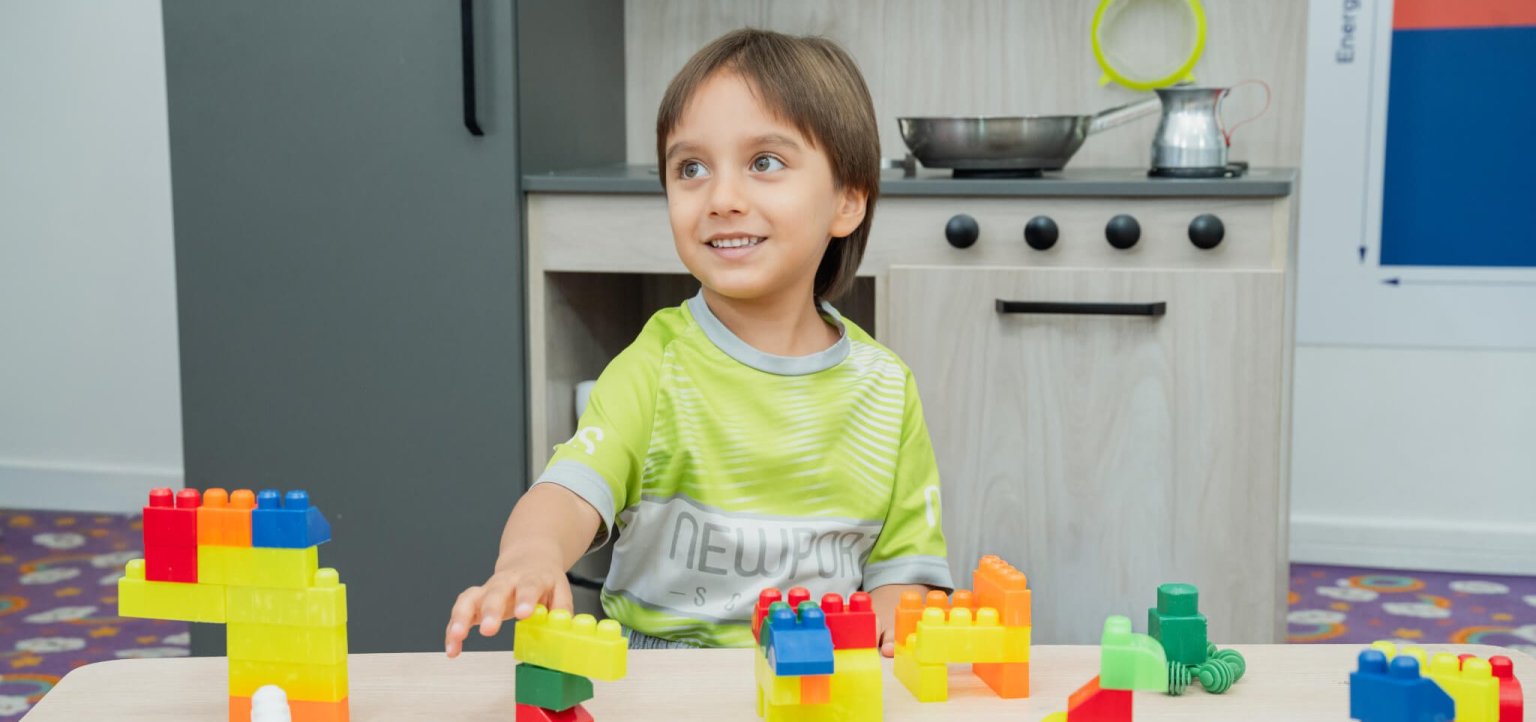

Routines are sequences of activities that are repeated daily and help organize children’s lives with clarity and consistency, from sleep schedules to mealtimes, study time, and recreation.
The World Health Organization highlights that stable daily habits directly influence physical and mental health during childhood and adolescence. Likewise, the Colombian Family Welfare Institute points out that organized environments support holistic development. In other words, routines are not just simple schedules; they are a quiet foundation for child development.
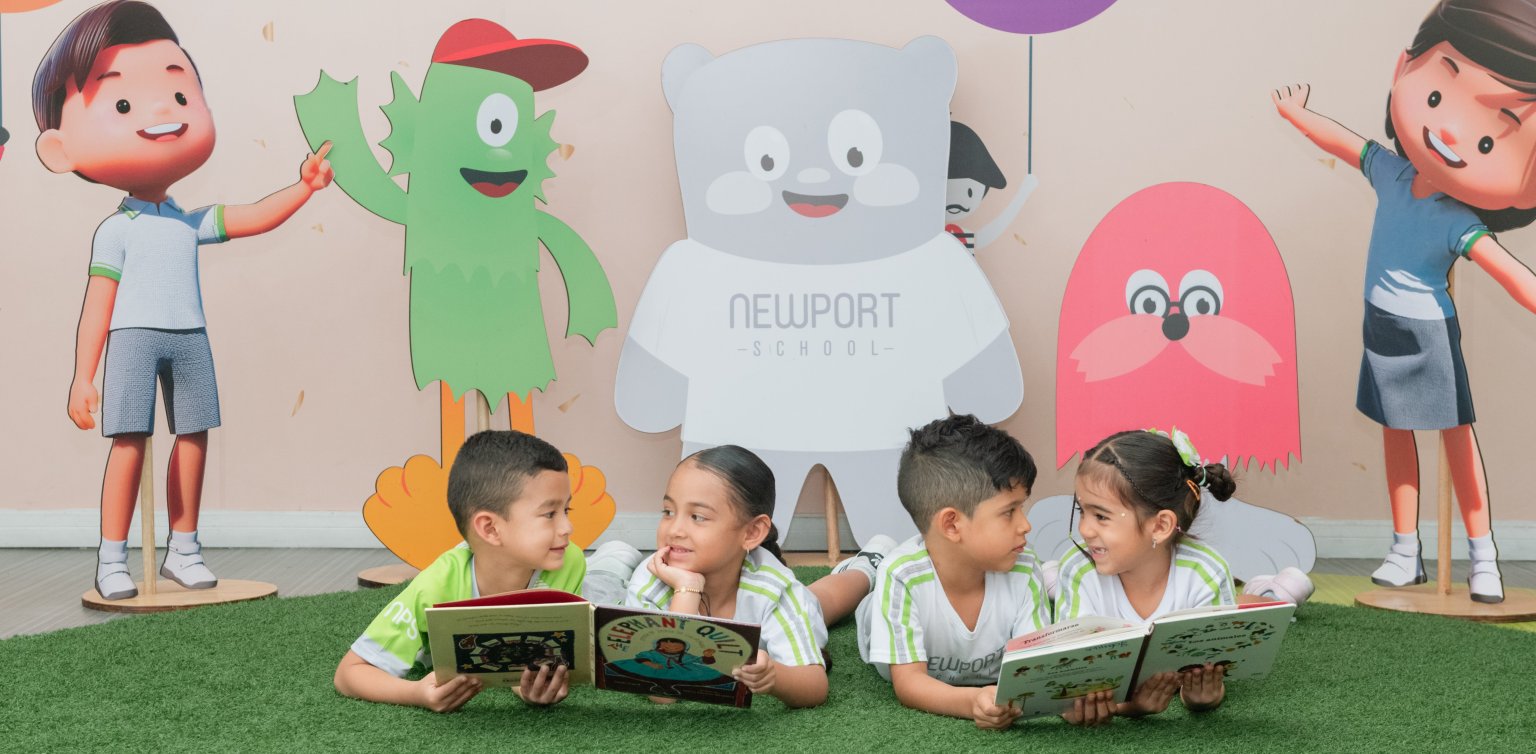
Recomendaciones prácticas para fortalecer rutinas en casa
Routines are built through repetition and consistency. When there are clear and consistent schedules, children learn to anticipate, organize, develop concentration, and strengthen self-control, all of which are essential skills for child development. In educational settings, these routines are supported and intentionally planned. From nap, meal, and play schedules in kindergarten to snack times and class transitions in primary school and adolescence, daily structure supports both well-being and learning.
- Daily consistency: Routines should become stable habits. Simple actions repeated at the same time each day help children internalize order and predictability.
- Modeling and consistency: Children learn by observing. When adults maintain routines with clarity and firmness, they model self-regulation and responsibility.
- Gradual implementation and balance: It is advisable to introduce new routines gradually, avoiding overload. Firmness should be accompanied by patience so that the habit becomes established naturally.
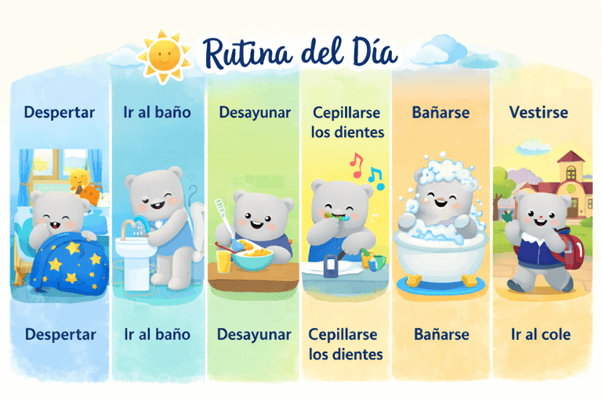
- Visual supports and playful resources: Routines can be reinforced through visual and interactive tools. Boards with images representing each activity of the day allow children to identify what comes next and participate actively by checking off or attaching each task with velcro once completed.
Benefits of Routines in Childhood and Adolescence
The benefits of routines impact multiple dimensions of child development. When a child knows what to expect, their stress level decreases and their sense of security increases. This translates into better sleep quality, a greater readiness to learn, and more stable relationships.
In addition, routines strengthen key skills such as concentration, organization, and impulse control. This helps children learn to wait their turn, complete tasks, and adapt to changes more easily. These abilities are essential in both childhood and adolescence, stages in which habit formation directly influences academic performance and personal autonomy.
Various guidelines in child education and well-being agree that daily consistency supports more balanced development. Routines do not limit children; rather, they create structure. And that structure becomes a key resource throughout growth.
How to Structure Routines According to the Stage of Development
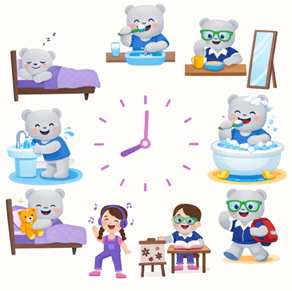
Routines should be adapted to the child’s age and level of autonomy. The structure should support their developmental stage. Here are some tips for building routines according to each child’s age:
Routine for ages 1 to 2
At this stage, the priority is safety and repetition. Routines should be simple and highly predictable: regular schedules for meals, naps, and playtime. Transitions should be anticipated with short phrases and clear gestures. Consistency in sleep schedules is essential for physical and emotional development.
Routine for ages 3 to 4
In preschool, children begin to understand sequences. At this stage, it is useful to establish a clear morning routine: waking up, getting dressed, having breakfast, and leaving for school in the same order every day. Evening routines should also remain consistent, including bath time, pajamas, a short reading time, and a fixed bedtime. At this age, visual supports work very well, such as boards with images representing each activity of the day.
Routine for ages 5 to 6
At this stage, autonomy increases. Children can actively participate in preparing their backpack, organizing materials, and completing tasks. The routine should include defined times for play, learning, meals, and rest. Clear schedules make school adaptation easier and strengthen habits that will be key in primary school.
From preschool onward, the school day is structured with a defined sequence that includes welcome time, planning the day, work periods, small-group and whole-group spaces, outdoor time, organized transitions, and moments for meals and rest. This organization allows children to anticipate, participate, and develop responsibility within a safe environment.
Routine in Primary School
In primary school, structure continues to be essential. It is recommended to establish schedules for homework, extracurricular activities, rest, and screen time. Maintaining a bedtime routine and preparing for the next day the night before supports autonomy and academic performance.
In the process of creating routines as part of child development, consistency between home and school is crucial. When routines are strengthened both at home and in the school environment, the impact is greater and more sustainable. Choosing educational environments that understand the importance of structure, emotional support, and the formation of healthy habits is a decision that goes beyond academics. It is a commitment to holistic well-being throughout childhood and adolescence.
 Agenda una visita y descubre por qué Newport School es la evolución de la educación aquí.
¿Por qué son importantes las rutinas para los niños?
¿Cómo ayudar a tu hijo a crear una rutina de estudio eficaz para tener un buen inicio de clases?